
Khotot Art Editorial Guide
Arabic Calligraphy Art Guide: History, Styles, Meaning, and Wall Art Ideas
Understand the major scripts, choose a meaningful composition, size it correctly, and place Arabic calligraphy with confidence in modern homes, offices, prayer rooms, and gift settings.
What Is Arabic Calligraphy Art?
Arabic calligraphy art is the practice of turning Arabic letters into a disciplined visual composition. The text may be a Quranic verse, a sacred name, a prayer, a cultural phrase, a proverb, a single word, or an abstract arrangement of letterforms. What separates calligraphy from ordinary writing is intention. The calligrapher works with scale, tension, spacing, curves, dots, vertical strokes, and empty space until the written phrase becomes an artwork.
The strongest pieces keep two responsibilities in balance. They respect the meaning of the words, and they also work visually inside a real room. This is why Arabic calligraphy can look appropriate in a traditional majlis, a contemporary apartment, a corporate office, or a quiet prayer room. The art form is old, but its visual language remains flexible.
Why Arabic Calligraphy Became a Major Art Form
Arabic script has been used for scholarship, poetry, architecture, manuscripts, textiles, ceramics, metalwork, and religious art. Over centuries, calligraphers developed formal systems for how letters should sit on the line, how strokes should be measured, and how the relationship between text and space should be controlled. That discipline helped calligraphy move from the page to walls, domes, panels, doors, and objects.
In Islamic art, calligraphy became especially important because words can carry remembrance, learning, and identity. A calligraphic artwork can be decorative, but it should not be empty. The best Islamic calligraphy wall art feels respectful, balanced, and calm. It does not need exaggerated claims or heavy ornament to feel meaningful.
For modern interiors, the value is practical as well as cultural. Arabic letters have strong visual character: long verticals, curved bowls, dots, diagonals, compact forms, and flowing connections. Even before the phrase is read, these forms create movement across the canvas. This makes calligraphy one of the few art forms that can be both text and image at the same time.
Arabic Calligraphy in Islamic Art
In Islamic art, calligraphy does more than decorate a surface. It can organize architecture, frame a manuscript page, mark a threshold, or place a meaningful text at the center of a visual composition. The written word may be experienced from a distance as rhythm and proportion, then read more closely for its meaning. That double role explains why calligraphy remains important across historic and contemporary Islamic visual culture.
When an artwork contains Quranic text or sacred names, accuracy and respectful presentation matter. The text should not be cropped carelessly, hidden by decorative effects, or placed where it is likely to be treated casually. A clean wall, appropriate height, controlled lighting, and enough negative space support both the dignity of the words and the visual quality of the room.
Meaningful Islamic wall art should also be described carefully. It is reasonable to speak about reflection and remembrance, religious and cultural significance, or the role of art in a calm interior. It is not appropriate to promise guaranteed spiritual outcomes. The value of the piece comes from the text, the composition, the viewer’s relationship with it, and the care given to its placement.
Major Arabic Calligraphy Styles
Knowing the main styles helps you avoid choosing only by color. Each script carries a different personality, and that personality affects how the artwork feels in the room.
| Style | Visual character | Best interior use |
|---|---|---|
| Kufic | Geometric, structured, architectural | Modern rooms, clean walls, minimal interiors |
| Thuluth | Elegant, tall, sweeping, ceremonial | Majlis spaces, formal living rooms, prayer areas |
| Naskh | Readable, balanced, classical | Pieces where legibility matters |
| Diwani | Curved, decorative, soft, ornate | Luxury corners, gifts, refined accent walls |
| Ruq’ah | Direct, compact, familiar | Short phrases and simple contemporary pieces |
| Modern calligraphy | Experimental, abstract, color-led | Contemporary homes, offices, hospitality spaces |
Kufic calligraphy
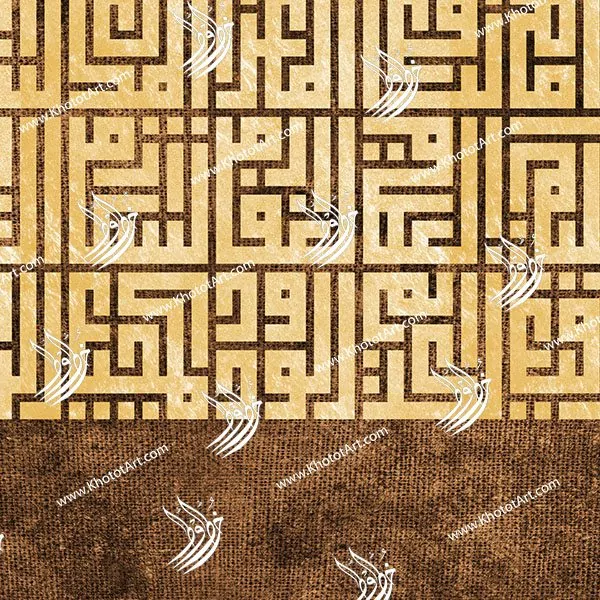
Kufic-inspired artwork often feels solid and architectural. The letters can be angular, squared, or arranged in a geometric system. This makes Kufic useful when the room already has clean lines, stone, concrete, timber, or a restrained palette. It can also work well in large formats because the structure remains readable from a distance.
Thuluth calligraphy
Thuluth has a more flowing and ceremonial presence. Its high verticals and sweeping curves make it suitable for feature walls and formal settings. A Thuluth-inspired canvas usually needs enough wall space around it. If it is crowded by shelves, frames, or small accessories, the elegance can be lost.
Naskh calligraphy
Naskh is a good choice when readability matters. It is balanced and familiar, which makes it suitable for Quranic verses and longer phrases. In wall art, Naskh can feel calm and clear, especially when the design avoids excessive backgrounds or visual noise.
Diwani calligraphy
Diwani is expressive and decorative. It can look luxurious in gold, deep green, navy, black, beige, or textured palettes. Because the forms can be dense, Diwani often works best as a smaller refined piece or as a carefully composed large artwork with controlled contrast.
Modern Arabic calligraphy
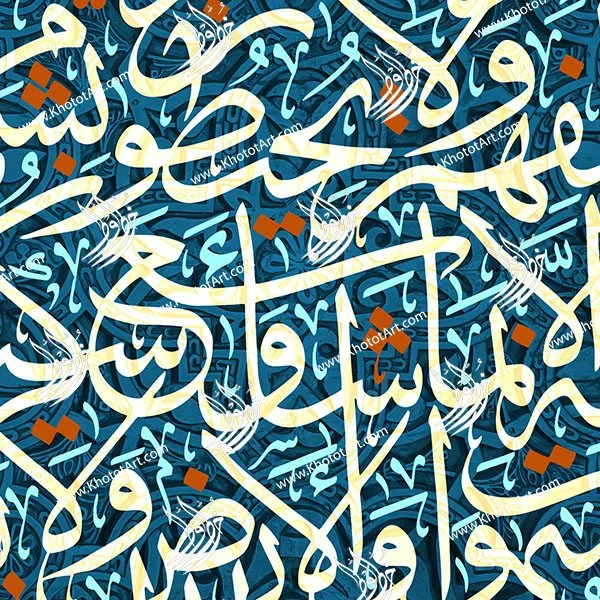
Modern Arabic calligraphy can abstract the letters, enlarge details, break the baseline, layer textures, or combine script with contemporary color fields. This direction is useful for buyers who want Arabic identity without a fully classical look. It also works well in offices and hospitality interiors where the piece needs to feel cultural but not overly traditional.
Ruq’ah calligraphy
Ruq’ah is a practical and readable script popular in everyday writing and modern applications. It has a balanced structure with clear letterforms and moderate height. Ruq’ah works well when the calligraphy needs to be both beautiful and easily read, such as for educational gifts, children’s rooms, or spaces where the text is part of daily reflection. It is less formal than Thuluth but more structured than casual modern lettering.
Arabic Calligraphy as Wall Art
As wall art, Arabic calligraphy serves both aesthetic and spiritual functions. The visual rhythm of the script creates immediate impact, while the meaning provides lasting resonance. Unlike purely decorative pieces, calligraphy invites repeated viewing and reflection.
When selecting calligraphy for wall art, consider the architectural character of your space. Traditional rooms with arches, carved wood, or patterned surfaces benefit from simpler letterforms. Modern interiors with clean lines and neutral palettes can accommodate more intricate scripts or bold abstractions.
The scale of the piece should relate to how people will experience the room. A piece viewed from across a living room can be more graphic and less detailed. A piece viewed closely in a prayer area or study can reward careful examination of stroke and spacing.
How to Choose Arabic Calligraphy Wall Art
Start with the words. The phrase should be appropriate for the room and for the person who will live with the artwork. A sacred text may be right for a prayer room or a calm living space. A cultural phrase may be better for an office, a hallway, or a gift. A single word can work when the goal is simplicity and atmosphere.
After meaning, consider readability. Some buyers want the text to be immediately legible. Others prefer a more abstract composition where the letters create movement and texture. Neither choice is automatically better. A readable piece gives clarity; an abstract piece gives mood. The right choice depends on the room, the viewer, and the purpose of the artwork.
Then choose the scale. A common mistake is buying a piece that is too small for the wall. Above a sofa, console, bed, or long desk, the artwork should relate to the furniture width. A large empty wall usually needs a strong horizontal canvas, a tall vertical composition, or a pair of coordinated pieces. In a narrow entryway, one vertical artwork may be more elegant than a wide piece.
Color matters, but it should not be the only decision. Beige, cream, sand, and soft blue can create calm. Black and gold can feel formal. Earth tones work well with wood and stone. White space helps the calligraphy breathe. High contrast can be powerful, but it needs enough room around it so the wall does not feel crowded.
Read the Room Before Choosing Artwork
Look at the room before you look at the product grid. The wall size, ceiling height, furniture width, floor finish, and lighting will tell you whether the artwork should be quiet, wide, vertical, dark, neutral, or colorful. A canvas that looks impressive in a product mockup may feel wrong if the room already has strong patterns or too many decorative objects. The right piece should solve a visual need in the room, not simply fill an empty rectangle.
Balance Text and Abstraction
Some Arabic calligraphy pieces are meant to be read immediately. Others are designed so the letters become shapes, rhythm, and movement. For a family room or prayer area, readability may be important because the phrase is part of the daily experience. For a hotel lobby, office, or modern hallway, abstraction can be more appropriate because the artwork is being used as a cultural and visual statement rather than a reading surface.
Use Negative Space
Negative space is the empty area around the calligraphy. It is not wasted space. It gives the letters room to breathe and makes the composition feel more premium. A canvas packed edge to edge with text can look powerful, but it can also feel heavy in a small room. If your furniture is already detailed, choose a calligraphy piece with generous empty space and a calm background.
Choose Color with Confidence
A neutral palette is not automatically boring. Beige, sand, ivory, taupe, and soft blue can make calligraphy feel peaceful and easy to place. Dark colors create drama, but they also demand better lighting and more wall space. Gold accents can look refined when used with control, but too much gold can make the piece feel decorative rather than elegant. The safest method is to repeat one or two existing room colors in the artwork.
Best Rooms for Arabic Calligraphy Art
Living rooms and majlis spaces
In living rooms, calligraphy can become the main visual anchor. Place it above a sofa, between two wall lights, above a console, or on the largest uninterrupted wall. For a majlis, choose a piece with a dignified scale and enough presence to be seen across the room. Avoid mixing too many unrelated small frames around a meaningful calligraphy piece.
Prayer rooms and quiet corners
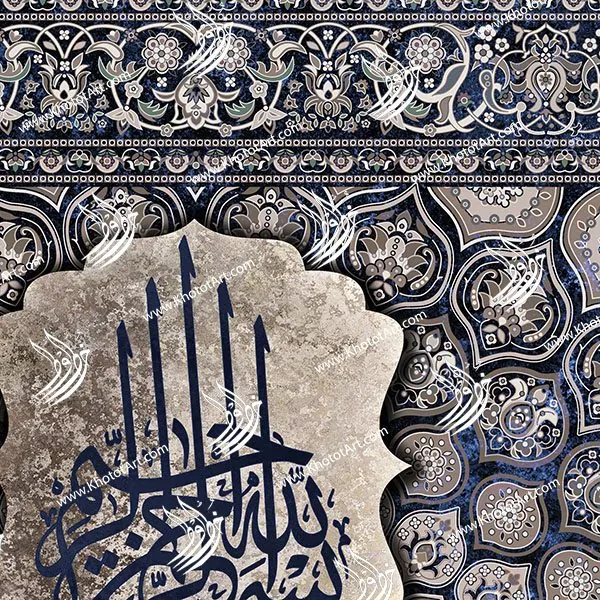
Prayer rooms benefit from artwork that feels calm rather than loud. A piece featuring Ayat al-Kursi, the 99 Names of Allah, Bismillah, or other Islamic calligraphy themes should be placed respectfully and simply. Soft palettes and balanced spacing usually work better than aggressive contrast in a reflection space.
Offices and reception areas
In offices, Arabic calligraphy can communicate identity and refinement without becoming decorative clutter. A strong piece behind a desk or in a reception area can make the space more memorable. For professional settings, choose a design with clean composition, controlled color, and a size that matches the wall rather than the desk alone.
Entryways
The entryway gives the first impression of the home. Arabic calligraphy works especially well here because it can express welcome, identity, and taste in one moment. A vertical artwork can suit a narrow wall; a horizontal canvas can work above a console with a lamp and simple accessories.
Bedrooms and private spaces
For bedrooms, choose quieter calligraphy. Avoid designs that feel too heavy or formal unless the room has the scale to hold them. A soft canvas with a meaningful phrase can work above a headboard or opposite the bed, but the color should support rest rather than compete with it.
Choosing Calligraphy by Theme
Different themes carry different expectations. Quranic calligraphy should be selected with care and placed respectfully. Names and short phrases can be easier to use across different rooms. Abstract letter compositions are flexible when the buyer wants Arabic visual identity but not a specific readable phrase.
Quranic calligraphy
Best for prayer spaces, calm living rooms, and meaningful gifts where the text is central.
99 Names of Allah
A strong Islamic wall art theme for homes, offices, and reflective interiors.
Bismillah artwork
Often suitable for entryways, dining areas, offices, and gifts.
Abstract Arabic letters
Useful for modern interiors that need Arabic identity with a contemporary visual style.
Canvas, Framed, and Large Wall Art Options
Material and Production Details to Check Before Buying
Before buying any canvas, review the product options and production details on the product page. Important points include size, canvas type, whether the artwork is supplied stretched or rolled, edge treatment, frame assumptions, production time, shipping method, and whether custom orders are possible. Do not assume that every canvas arrives in the same format. A rolled canvas and a stretched canvas solve different needs.
A stretched canvas can be more convenient when you want a finished artwork that can be displayed quickly. A rolled canvas can be useful when shipping, framing, or local stretching is preferred. Gallery-wrapped edges create a clean side view and can make the piece feel complete without an additional front frame. If you need a floating frame, confirm whether it is included or only shown in mockup images.
Color variation is normal because screens, lighting, and print materials differ. This is not a weakness of canvas art; it is part of buying printed work online. The practical solution is to choose artwork that fits the overall room palette rather than relying on one exact screen color.
How to Size Arabic Calligraphy Canvas Art
Measure the wall before choosing a canvas. For furniture-backed walls, such as above a sofa or console, the artwork should usually relate to the furniture width. Too small, and the piece looks accidental. Too large, and it can overpower the room. For open walls, consider the viewing distance. A piece seen from across the room can be larger and bolder than a piece viewed in a narrow hallway.
Vertical calligraphy can make a wall feel taller. Horizontal calligraphy can make a seating area feel wider. Square compositions can work well above compact furniture or in a gallery arrangement. Multi-panel designs can be effective, but only when the spacing between panels is controlled and the wall has enough width.
If you are buying a gift and do not know the wall size, choose a versatile medium size or a design that can work in several rooms. Avoid extremely large custom sizes unless you know the recipient’s home and taste well.
- Measure the clear wall area, not only the full wall.
- Measure the sofa, console, bed, or desk beneath the artwork.
- Mark the proposed dimensions on the wall before ordering.
- Check whether the composition is horizontal, vertical, or square.
- Confirm the actual product format and what is included.
- Leave enough breathing room around meaningful or sacred text.
Styling Arabic Calligraphy in Modern Interiors
Arabic calligraphy pairs well with natural materials: wood, stone, linen, textured plaster, warm metals, and neutral fabrics. It can also work with modern furniture when the canvas has enough negative space. The key is not to over-explain the wall. One strong artwork, one table lamp, and a simple surface can look more expensive than a busy arrangement of unrelated objects.
For a calm interior, use soft calligraphy colors and keep the surrounding wall clean. For a formal interior, use deeper contrast, larger scale, and symmetrical placement. For a creative office, use modern Arabic letterforms or bolder color. For a family home, choose a phrase or theme that feels personal rather than purely decorative.
Lighting matters. A calligraphy canvas should not be hidden in shadow. Place it where daylight or a warm wall light can reveal the texture and details. Avoid direct harsh sunlight if the product page advises against it, and avoid placing meaningful religious text in areas where it may be treated casually.
Working with Large Walls
A large wall needs scale, not clutter. Many buyers try to solve a large wall by hanging several small pieces, but the result can feel scattered. A single strong calligraphy canvas often works better. If you use multiple artworks, keep the spacing consistent and make sure the pieces share a visual language. The goal is one controlled composition, not a collection of unrelated purchases.
Calligraphy for Hospitality Interiors
In restaurants, hotels, lounges, and reception areas, Arabic calligraphy can create identity without relying on obvious decoration. The artwork should be legible enough to feel intentional but not so detailed that it distracts from circulation, service, or seating. Large-format calligraphy works best where people have time to pause: waiting areas, lobbies, private dining rooms, and quiet corridors.
Respectful Placement
When the artwork includes Quranic text or sacred names, placement matters. Avoid locations where the piece may be exposed to disrespect, visual chaos, or careless handling. A clean wall, balanced height, and appropriate surrounding objects all support the dignity of the text. This is not only a religious concern; it also improves the visual result because meaningful calligraphy loses power when treated as filler.
Pairing with Furniture
Above a sofa, the canvas should sit low enough to connect with the seating area but high enough to breathe. Above a console, it should relate to the width of the furniture and the height of any lamps or vases. In an office, the artwork can align with the desk or sit centered behind the chair. Good placement makes the wall and furniture feel designed together.
Custom Sizing Decisions
Custom sizes are useful when the wall has unusual proportions or when a project needs a specific visual effect. Before requesting custom sizing, measure the available width, the desired viewing distance, and the objects near the wall. A custom canvas should not simply be bigger; it should be better matched to the architecture of the room.
Building a Collection Over Time
If you plan to buy more than one calligraphy piece, build slowly. Choose one anchor artwork first. Then add supporting pieces that share a palette, style, or theme. Mixing Kufic, Thuluth, Diwani, and abstract letters can work only when there is a clear design logic. Without that logic, the wall can become visually noisy.
Why Accurate Product Wording Matters
A product description for calligraphy should not rely on vague phrases such as must have, beautiful blend, or perfect for everyone. Buyers need to understand the subject, the style, the material, the scale, and the setting. Good copy respects the artwork and helps the customer decide whether the piece belongs in their room.
How to Compare Two Similar Pieces
When two artworks seem similar, compare the density of the calligraphy, the contrast level, the amount of negative space, the background texture, and the emotional tone. One piece may feel formal while another feels calm. One may suit a majlis while another suits a bedroom. The better artwork is the one that solves the specific room and meaning, not the one with the most decoration.
Arabic Calligraphy as a Meaningful Gift
Calligraphy makes a strong gift because it has both beauty and meaning. It can work for weddings, housewarmings, Ramadan, Eid, office openings, and family occasions. The safest gift choices are elegant, balanced, and not too large. If the recipient’s taste is unknown, avoid highly unusual colors or very ornate compositions.
When gifting Islamic calligraphy, think about the recipient’s home and the respect due to the text. A beautiful piece should be easy for them to place. If the artwork is too large, too bright, or too specific, it may become difficult to use even if the idea is appreciated.
Featured Arabic Calligraphy Art
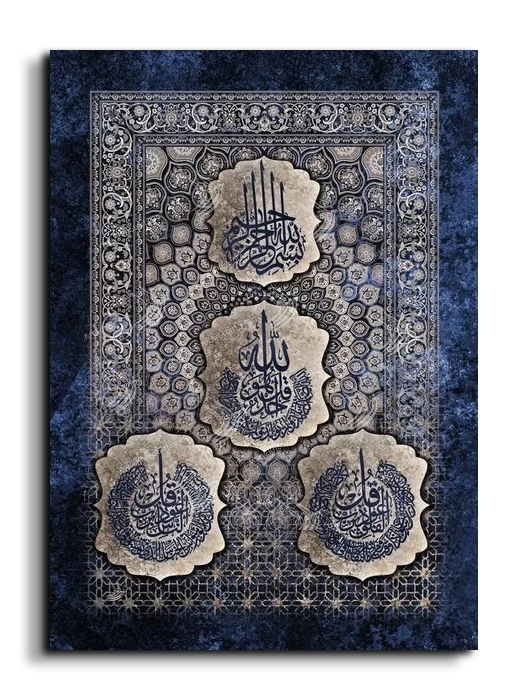
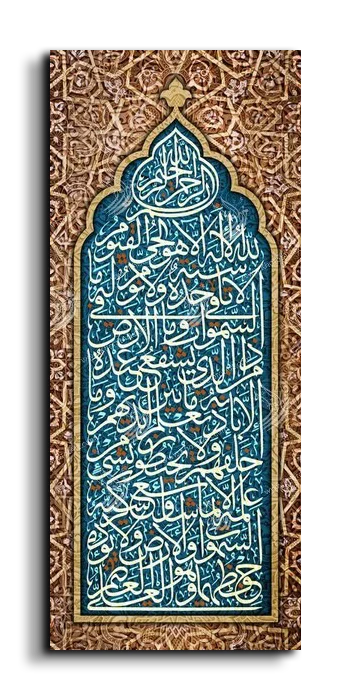
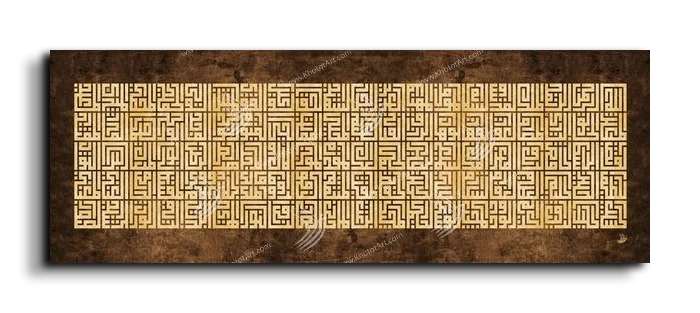
These examples show three different ways calligraphy can work in an interior: a vertically composed Quranic artwork, a wide 99 Names of Allah design, and a coordinated set of surahs in a softer palette. Review the available sizes and formats on each product page before ordering.
Ayat Al Kursi آية الكرسي Canvas
99 Names of Allah Canvas
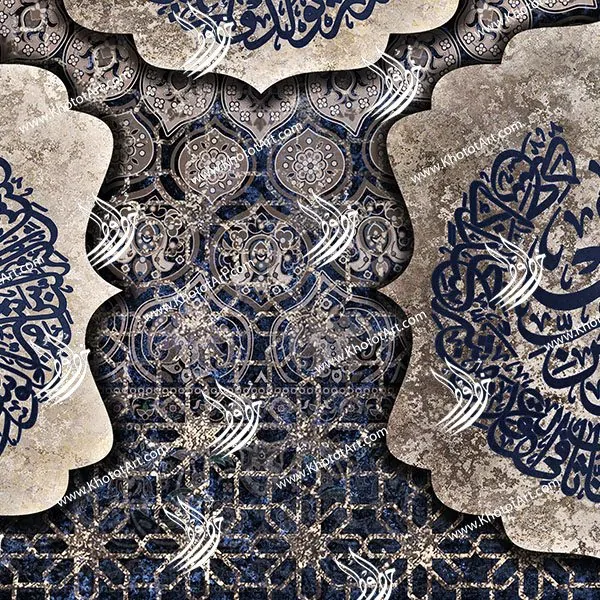
Surat Al-Falaq, Al-Ikhlas and An-Nas Canvas
Common Mistakes to Avoid
- Choosing only by color and ignoring the meaning of the phrase.
- Buying a canvas that is too small for the wall.
- Placing sacred text in a casual or visually crowded location.
- Assuming a mockup frame or room scene is included with the product.
- Ignoring whether the selected format is rolled, stretched, framed, or gallery wrapped.
- Using too many unrelated calligraphy styles on the same wall.
- Choosing heavy contrast for a room that needs calm.
Frequently Asked Questions
Is Arabic calligraphy art suitable for modern homes?
Yes. Arabic calligraphy can work in modern homes when the composition is clean, the scale is correct, and the color palette supports the room. Modern calligraphy and Kufic-inspired designs are especially useful for contemporary interiors.
What is the best Arabic calligraphy style for wall art?
There is no single best style. Kufic feels structured, Thuluth feels elegant, Naskh is readable, Diwani is decorative, and modern calligraphy is flexible. Choose the style that matches the room and the meaning of the text.
Where should Islamic calligraphy be placed?
Place Islamic calligraphy in a respectful, visible, and uncluttered location. Living rooms, offices, entryways, and prayer rooms can work well when the placement is thoughtful.
Should I choose canvas or framed calligraphy?
Canvas is useful for a clean, contemporary wall art look. Framing may be better when the room has a formal style or when you want extra protection and definition. Always check the product page to confirm what is included.
Can Arabic calligraphy be a wedding or housewarming gift?
Yes. It can be a thoughtful gift when the theme, size, and style fit the recipient. For gifts, balanced designs and versatile sizes are usually safer than very large or highly specific custom pieces.
Advanced Selection Guide for Buyers and Designers
When Arabic calligraphy is used in a designed interior, the artwork should be chosen with the same discipline used for furniture, lighting, and finishes. The first question is not whether the image looks attractive on a screen. The first question is what role the artwork should play in the room. It may be the main focal point, a quiet spiritual accent, a cultural identity marker, a gift with personal meaning, or a visual bridge between traditional and contemporary elements.
For a focal wall, choose a canvas with enough scale and contrast to hold attention from the main seating position. For a quiet corner, choose softer colors, more negative space, and a phrase that feels reflective rather than visually loud. For a public office or reception area, avoid overly private wording and choose a composition that communicates refinement without requiring every visitor to read the text.
Designers should also consider viewing distance. A detailed calligraphy composition may look beautiful close up but lose clarity from across a large room. A bolder Kufic or modern calligraphy piece may read better at distance. The closer the viewer stands to the artwork, the more texture, detail, and subtle color variation matter. The farther away the viewer stands, the more silhouette, contrast, and general composition matter.
How to Evaluate Quality Beyond the Mockup
Room mockups are useful, but they can also hide weak decisions. A mockup may make a small artwork look larger than it is, or show a frame that is not included in the product. Before ordering, read the product details and compare the actual size with your wall. Check whether the image shown is the artwork itself, a lifestyle scene, or a proportional illustration. A good buying decision depends on the actual canvas, not only the staged room scene.
Look at the edges of the design. If the product is gallery wrapped, the side treatment matters because the artwork may be visible from an angle. If the product is rolled, plan how it will be stretched or framed locally. If the artwork includes a sacred phrase, avoid cropping or framing choices that cut the text awkwardly. The physical presentation should support the calligraphy rather than fight it.
Creating a Coordinated Wall with Arabic Calligraphy
A coordinated wall does not require every object to match. It requires hierarchy. Choose one primary piece, then let the surrounding elements support it. A console table, ceramic object, lamp, book stack, or plant can work with calligraphy if those objects do not compete with the text. The artwork should remain the reason the wall exists.
If you want to combine calligraphy with abstract art, keep the color palette connected. For example, a beige and blue calligraphy canvas can sit near a soft abstract piece if both share calm tones and enough spacing. A black and gold calligraphy piece may need darker accents nearby, such as a metal lamp, dark wood, or a neutral rug. The goal is continuity, not repetition.
For gallery walls, avoid using too many calligraphy pieces with different scripts. One calligraphy artwork can be supported by simpler abstract, architectural, or photographic pieces. If every frame contains a different phrase and script, the wall can become hard to read and visually restless.
Buying for Religious, Cultural, and Decorative Reasons
People buy Arabic calligraphy for different reasons. Some want a piece that supports remembrance and reflection. Some want Arabic identity in a modern interior. Some are buying for a wedding, housewarming, Ramadan, Eid, or office opening. Others simply love the visual rhythm of Arabic letters. Understanding the reason matters because it changes the best choice.
When the reason is religious, the phrase and placement should lead the decision. When the reason is cultural, the style and authenticity of the letterforms may matter more. When the reason is decorative, color, scale, and composition may be the strongest factors. A successful piece can satisfy more than one reason, but the primary reason should be clear before buying.
Final Professional Checklist
- Define whether the artwork is a focal point, accent, gift, or identity piece.
- Confirm the phrase and whether readability matters.
- Match script personality to the room: structured, formal, readable, decorative, or modern.
- Measure wall width, furniture width, and viewing distance before choosing size.
- Check product format: rolled canvas, stretched canvas, framed artwork, or gallery wrap.
- Review material claims and avoid assuming details not stated on the product page.
- Choose colors that support the real room, not only the product mockup.
- Place sacred or meaningful text with visual and cultural respect.
- Use lighting to reveal the artwork without glare or harsh shadow.
- When in doubt, choose a calmer piece at the correct size rather than a louder piece that overwhelms the wall.
Conclusion: Choose Meaning, Scale, and Quality Together
Arabic calligraphy art succeeds when the words, the visual composition, and the room support one another. Start with a phrase that matters, confirm whether readability is important, and choose a script personality that suits the space. Then measure the wall, compare the real dimensions, review the product format, and use room mockups only as visual references rather than proof of scale or included framing.
A thoughtful choice does not need exaggerated claims. It needs accurate wording, respectful placement, enough breathing room, and a design that can remain meaningful after changing trends. Whether the artwork is for a home, office, prayer room, reception area, wedding, or housewarming gift, the best piece is the one that feels intentional in both meaning and proportion.
Explore Khotot Art’s Arabic calligraphy wall art collection and compare Ayat al-Kursi, the 99 Names of Allah, Quranic calligraphy, and contemporary Arabic letter compositions for your space.
Continue Exploring Arabic Calligraphy
Browse the full calligraphy collection, compare featured artworks, and choose a piece that suits the meaning, proportions, and atmosphere of your space.